

The name of this organization shall be North Carolina Government Finance Officers Association (Association). It was formed through the merger of the North Carolina Government Finance Officers Association (NCGFOA) and the North Carolina Association of County Finance Officers (NCACFO) on March 1, 2011.

About NCGFOA
In October of 1953, twenty-five men met at the George Vanderbilt Hotel in Asheville to address their objectives for governmental finance.
"To promote the improvement of methods of governmental financing...encourage the use of common terminology...encourage periodic independent audits and continuous internal audits within governmental units...achieve greater success in efficiency and services of government...";
Out of their concern, and the dedication of five men in particular--Ralph Dixon of Winston-Salem, Rainey Pope of Burlington, Dan Umstead of Durham, Lake Crowe of High Point, and A. E. Guy of Statesville--the North Carolina Government Finance Officers Association was formed. Their goal was to develop professional and ethical standards among their contemporaries.
Board of Directors

President
Zachary Hewett
Finance Director
Village of Bald Head Island
106 Lighthouse Wynd
Bald Head Island, NC 28461
910-457-9700 x1006

President Elect
Tim Flora
Chief Financial Officer
City of Durham
101 City Hall Plaza (Annex)
Durham, NC 27701
919-560-4455 x18229
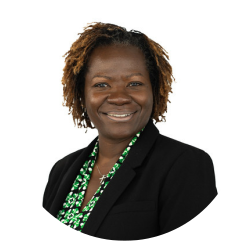
Treasurer/Secretary
Tiffany Murray
Chief Financial Officer
City of Fayetteville
433 Hay Street
Fayetteville, NC 28301
(910) 433-1682

Past President
Peggy Reece
Chief Financial Officer
City of Burlington
237 West Maple Avenue
Burlington, NC 27215
336-222-5026

Director
David Boyd
Chief Financial Officer
Mecklenburg County
700 East 4th Street
Charlotte, NC 28202
980-314-2688

Director
Caleb Hogan
Finance Officer
Avery County
PO Box 640, Newland NC 28657
828-733-8200

Director
Nikki Dickerson Stanton
Finance Director
Nash County
120 W Washington Street
Nashville, NC 27856
252-462-2402
Constitution & By-Laws
Adopted & approved by the Association on July 20, 2026
The purpose of this Association shall be to promote and improve governmental finance in North Carolina as informed by the Government Finance Officers Association of the United States and Canada, the Governmental Accounting Standards Board, the Department of the State Treasurer, and other recognized authorities in the field of government administration.
The Association should encourage initiatives to:
- Develop mutually understandable procedures of accounting, budgeting, and financial reporting.
- Strengthen financial policies to guide decision making by management and elected officials.
- Promote the use of strong internal controls to enhance accountability.
- Maintain the understanding of technological changes that affect financial processes.
- Facilitate the discussion and analysis of financial issues arising under the laws of North Carolina.
- Improve the recruitment, training and professional personal development of qualified government finance officials and their employees.
- Achieve greater success in efficiency and service to the citizenry and constituents of government units.
- Develop closer relationships and understanding among those concerned with government finance in government jurisdictions of North Carolina
- Identify, educate, and inform policy and rule makers on matters of mutual interest to government finance officers.
The Association shall be an affiliate of the North Carolina League of Municipalities and the North Carolina Association of County Commissioners, subject to mutual execution of a signed annual agreement for services, if necessary, and the President shall make any appointments or nominations from the relevant membership as requested by those two organizations.
The Association has five categories of membership: Member, Associate Member, Student Member, Lifetime Member and Honorary Member.
“Member” – Any accounting or finance-related official, whether elected or appointed, in a government jurisdiction in North Carolina may become a Member of the Association.
“Associate Member” – Any person not eligible to be a Member but who is interested in the principles and practices of governmental finance and who subscribes to the purpose of the Association may
become an Associate Member.
Adopted November 13, 2023
“Student Member” – Student membership may be granted to any undergraduate or graduate student interested in the purposes of the Association, upon application and payment of annual dues, if any.
“Lifetime Member” – Lifetime membership can be approved by the vote of the Executive Committee and should be reported to the members of the Association during a business meeting of the full membership. Requirements to be considered for Lifetime membership are that a member either a) retires with at least 20 years of service in government finance, of which at least the last five years must have been in North Carolina or b) has served as President of the NCGFOA or the NCACFO.
“Honorary Member” – Honorary membership can be approved only by the vote of the members of the Association during a business meeting of the full membership. Any resident of the State of North Carolina, who in the opinion of the Association has rendered distinguished service to the cause of better government, shall be eligible for honorary membership. Honorary members shall be entitled to all the privileges of the Association except that they shall not be eligible to hold office in the Association and they shall not be accorded the privilege of voting.
The Association operates under a fiscal year that begins January 1 and concludes on December 31. The Association will levy annual dues the amount of which shall be determined by the Executive Committee. Non-payment of dues shall be cause for suspension of membership.
Active Board of Directors, Lifetime Members and Honorary Members are not required to pay annual dues.
Lifetime Members shall not be charged any base registration fee for statewide conferences.
A member of any membership category can be terminated by a majority vote of the membership.
The Board of Directors consists of seven members serving one-year terms. This includes three officers, the immediate past-president and three directors elected from the Members at large. The officers of this Board shall be the President, Vice President/President-Elect, Secretary/Treasurer and shall constitute the Executive Committee, and shall serve with intent of progression through the executive committee roles. Board members may serve for a maximum of eight consecutive years, inclusive of service as a Director and/or Officer. Directors are eligible for nomination as officers within such eight year period; however no individual shall be elected or appointed to an Officer position unless sufficient term eligibility remains for the individual to complete the anticipated officer succession path without exceeding the eight-year maximum.
All officers and directors must have the status of active members of the Association. The nomination of officers and directors should take into consideration the need for a diverse representation of experienced government finance professionals. Whenever possible, the Board of Directors should include representation from each of the following: a county with a 75,000 or less population, a city or town with 30,000 or less population and a special district or public authority. Each Board member should have a minimum of three years’ experience in North Carolina government finance.
The Executive Committee has the authority to create and disband standing and/or special purpose ad hoc committees. The directors will serve as chair of any standing committee(s).
Adopted November 13, 2023
The Board of Directors is elected at the last business meeting of the last conference of the calendar year and takes office as of January 1 and shall continue in office until their successors shall be duly elected and qualified.
The Executive Committee shall have control of and be responsible for the management of the affairs and property of the Association.
Not later than 90 days before the last regular meeting of the calendar year, the President shall appoint a Nominating Committee consisting of the most recent immediate Past President, if still a Member of the Association, who shall be Chairperson, and at least three other Board of Director members. The Nominating Committee shall nominate one candidate for each position to be filled. Further nominations may be made from the floor during the annual meeting.
It shall be the duty of the Executive Committee to transact the business of the Association including arrangement of meetings as to time, place, and program; to study all matters referred to it by the Association and to perform other duties pertaining to the advancement and welfare of the Association, including the authority to incur expenses for services that support the operation of the association and enhance the execution of the Association’s mission. The Executive Committee may establish policies and practices as needed for the efficient operation of Association business, including but not limited to a conflict-of-interest policy.
The Board of Directors shall adopt an annual operating budget prior to the beginning of each fiscal year. The budget shall serve as authorization for expenditures consistent with the approved purposes and activities of the Association.
The Association shall maintain a system of internal controls designed to safeguard assets, ensure the reliability of financial records, promote operational efficiency, and ensure compliance with applicable laws and policies.
To the extent practical, financial responsibilities shall be separated among different individuals to provide appropriate segregation of duties. Where staffing limitations prevent full segregation, compensating controls shall be established and documented.
The Board shall receive periodic reports comparing actual revenues and expenditures to the approved budget; reports on cash and investment balances; information regarding significant financial commitments and obligations; and such other financial information as the Board may require for effective oversight.
The Association shall maintain financial reserves in accordance with a Reserve Policy adopted by the Board of Directors. The policy shall establish reserve targets, permissible uses of reserves, replenishment expectations, and procedures for Board oversight.
At each business meeting of the association, the Board will present a financial report to the membership, which at the first business meeting of the year, will include at a minimum, the adopted budget, and actual reserves with comparison to adopted reserve policy.
The Board of Directors may adopt and amend financial policies as necessary to provide detailed guidance regarding budgeting, reserves, investments, purchasing, contracts, reimbursements, internal controls, and other financial matters. Such policies shall be consistent with these Bylaws and shall not require amendment of the Bylaws unless specifically stated herein.
Adopted November 13, 2023
If a member of the Board of Directors ceases being an accounting or finance-related official in a government jurisdiction in North Carolina, their continuing status shall be determined as follows: if the person is still employed by a government jurisdiction in North Carolina in some other position, they may continue to serve on the until the end of their current term; otherwise, they shall resign from the Board of Directors.
Any vacancy by an officer of the Association during the year shall be filled by another member of the Board of Directors to serve the remainder of the term, elected by a majority vote of the Board of Directors. Any vacancy by a director during the year may be filled by a member to serve the remainder of the term, elected by a majority vote of the Board of Directors.
Any member of the Board of Directors may be removed with or without cause, at any time, by vote of five of the members of the Board of Directors, if in their judgment the best interest of the Association would be served thereby. Each member of the Board of Directors must receive written notice of the proposed removal at least ten (10) days in advance of the proposed action. An officer who has been removed as a member of the Board of Directors is immediately and automatically removed from office.
The Association shall hold a business meeting at each statewide conference, one of which shall be the regular annual meeting at the last conference of the calendar year as scheduled by the Executive Committee. Special meetings may be held after suitable notice, electronic or otherwise, at least 10 days in advance. At special meetings, only those matters specified in the call may be considered. In the case of public health or safety threats, a business meeting of the whole membership may be held virtually during regular business hours, with suitable notice, electronic or otherwise, at least 10 days in advance.
All statewide conferences held by the Association may have separate, concurrent sessions focused on specific current topics for cities and counties and special units and arranged to provide networking opportunities where appropriate. Regional meetings and virtual training may have content focused on specific issues that meet the needs of less than all members.
Only Members are eligible for election as an officer or director of the Association, and only Members may vote on Association business. Each Member is entitled to one vote on any matter of Association business.
With the exception of the constitution and by-laws, all issues to be voted on shall be decided by a simple majority of the active members present at any regular or special meetings of the Association.
This constitution and by-laws may be amended at any regular or special meetings of the Association by a two-thirds vote of the active members present, providing that written notice, electronic or otherwise, of the proposed amendment has been sent to all active members at least 30 days before the meeting.
Adopted November 13, 2023
North Carolina Government Finance Officers Association recognizes that some sponsors & affiliates are subject to a variety of U.S. securities regulations and other laws, including MSRB Rule G-37, CFTC Rule 23.451 and SEC Rule 206(4)-5. North Carolina Government Finance Officers Association acknowledges that, as a result, sponsors and their regulated personnel are prohibited from, or may be required to publicly report, making certain direct and indirect contributions to state and local officials, candidates, political committees, parties, and ballot initiative campaigns.
To assure sponsors that any donation for the general support of North Carolina Government Finance Officers Association will be used in a manner that is consistent with the above restrictions, as well as restrictions on sponsors’ political activity under federal, state, and local law, North Carolina Government Finance Officers Association acknowledges that:
- North Carolina Government Finance Officers Association is a non-profit organization exempt from federal income taxes under Section 501(c)(6 ) of the Internal Revenue Code and it is not registered or acting as a political committee under federal election law or any state or local election law.
- North Carolina Government Finance Officers Association has not been established and is not maintained, financed, or controlled by a national, state, or local party committee, or a federal, state, or local candidate or officeholder.
- North Carolina Government Finance Officers Association does not coordinate its activities with any party committee, candidate, candidate’s campaign, or political action committee.
- North Carolina Government Finance Officers Association does not make contributions to or expenditures on behalf of or engage in any activity to support or otherwise benefit, any federal, state, or local candidate, party, or political committee.
Donations to North Carolina Government Finance Officers Association will not be used for any election-related activity, including any federal, state, or local contribution or expenditure (including an independent expenditure) to support or oppose any candidate campaign, ballot initiative, political party, or other political action committee, or in any way that is directly or indirectly prohibited under applicable federal, state, or local law. Donations will not be used to pay for any expenses or events that violate applicable gift and entertainment rules for foreign, federal, state, or local officials.
The Association will continue as long as considered necessary by the membership. In the event of liquidation, any assets of the Association will be transferred to the University Of North Carolina School Of Government to continue the promotion of government finance and the education of government finance professionals.
I, Tiffany Murray, Secretary/Treasurer of the North Carolina Government Finance Officers Association, do hereby certify that the foregoing is a true and exact copy of the by-laws duly adopted by the membership at the regular meeting thereof duly called and held on July 20, 2026, a quorum being present.
_____________________________, Secretary/Treasurer
ADOPTED AND APPROVED by the Association on this 20thth day of July 2026.
Adopted November 13, 2023
Code of Ethics
Past Presidents
On behalf of the members of the North Carolina Government Finance Officers Associations, we offer a special thanks to all of those who have served as president of the organization. We are grateful for the leadership, dedication, direction and service provided.
2025 Peggy Reece
2024 Thomas Wrenn
2023 Allen Coats
2022-23 Allison Bradsher
2021-22 Antwan Morrison
2020-21 Deanna Rios
2019-20 Karen Mills
2018-19 Will Massie
2017-18 Jeff McCauley
2016-17 Lisa Saunders
2015-16 Lisa Minter
2014-15 Dee Meeshaw
2013-14 Karen Duncan
2012-13 Donna Clark
2011-12 Rodney Miller
2010-11 Paul L. Fulton, Jr.
2009-10 Jeffrey A. Moore
2008-09 R. Patricia Leckey
2007-08 Betty W. Taylor
2006-07 Jackie A. Huffman
2005-06 Pamela S. Dubois
2004-05 Timothy Inch
2003-04 Ronnie R. Wilson
2002-03 Ken Chavious
2001-02 Richard E. Durham
2000-01 Joyce Watson
1999-00 John Sofley
1998-99 Ralph Staley
1997-98 Bernita Demery
1996-97 John Pedersen, Jr.
1995-96 Gordon Baker
1994-95 Denise Bell
1993-94 Kelway Howard
1992-93 Richard Lusk
1991-92 Evelyn Guinn
1990-91 Dot Bumgarner
1989-90 Jim Baker
1988-89 Perry James
1987-88 Bill Truett
1986-87 Richard Slozak
1985-86 Nancy Nichols
1984-85 Bernice Phillips
1983-84 Helen Huffman
1982-83 Douglas Carter
1981-82 Betsy Wilson
1980-81 J.D. Harrell
1979-80 Larry Fisher
1977-79 Charles W. Pittman III
1976-77 Dorothy Biggs
1975-76 Bryan Hill
1974-75 William Whisnant
1973-74 Ralph L. Shepherd
1972-73 Joe B. Collette
1971-72 William B. Morris
1970-71 Ralph S. Sick
1969-70 Albert G. Taylor
1968-69 M.L.Clark
1967-68 John L. Zong
1966-67 H.E. Russell
1965-66 C.M. Conway
1964-65 Dems B. Padgett
1963-64 Francis Luther
1962-63 J.C. Hill
1961-62 Ernest J. Ward
1960-61 Rainey P. Pope
1959-60 J.R. Holshouser
1958-59 Ralph L. Dixon
1957-58 H.H. Duncan
1956-57 L.L. Ledbetter
1955-56 H.L. Cowe
1954-55 Dan H. Umstead
1953-54 A.E. Guy
Committees & Affiliations
National Government Finance Officers Association:
Past Presidents:
(2022) W. Patrick (Pat) Pate
City Manager, Winston-Salem
(2021) Michael Bryant
Assistant County Manager, Mecklenburg County
Committee On Governmental Budgeting and Fiscal Policy:
Jesus Gimenez
Business Manager, Mecklenburg County
Committee On Governmental Debt Management (DEBT):
Jennifer Stevens
Assistant Financial Officer, City of Raleigh
Bobby Fitzjohn
Financial Services Director, City of High Point
Committee on Economic Development (CEDCP):
Teresa Smith
State Treasurer’s Office, NC
Johnny Taylor
Collections Division Manager, County of Durham
Committee on Treasury and Investment Management (TIM):
Allison Bradsher
Chief Finance Officer, City of Raleigh
Matthew Hastedt
CFO, City of Charlotte
Local Government Commission
Steering Committee:
-
- To investigate the feasibility of bidding and purchasing finance software for small units of government
- William Massie - Assistant County Manager/Finance Officer - Randolph County
North Carolina Government Finance Officers Association Committees:
Advocacy, Chair - Board Director David Boyd
Membership, Chair - Board Director Caleb Hogan
Education, Chair - Board Director Nikki Stanton
Certification, Chair - Past President Allen Coats